 Hover to zoom
Woven Elastic
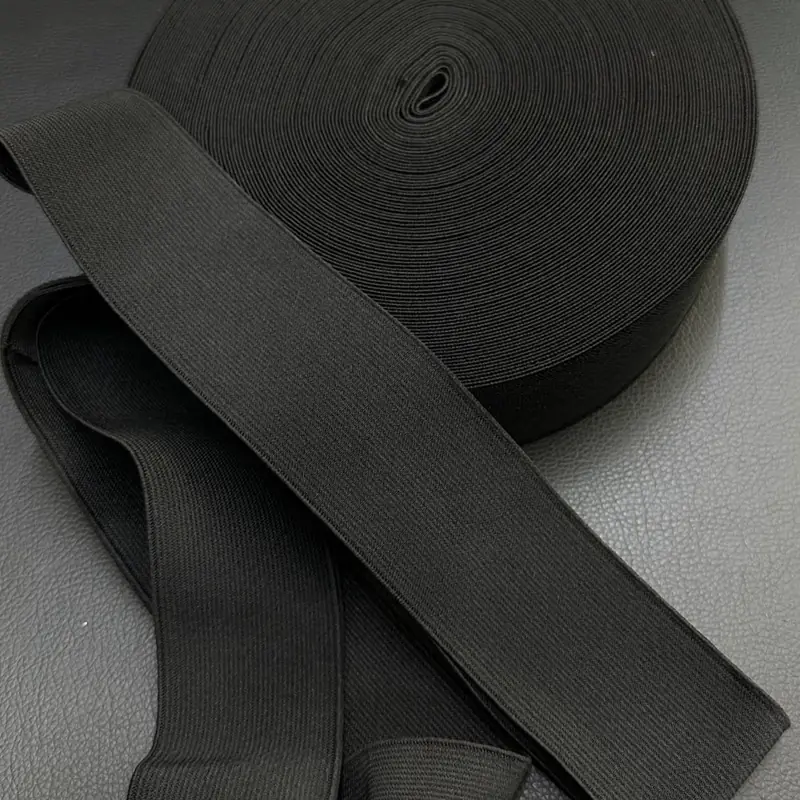
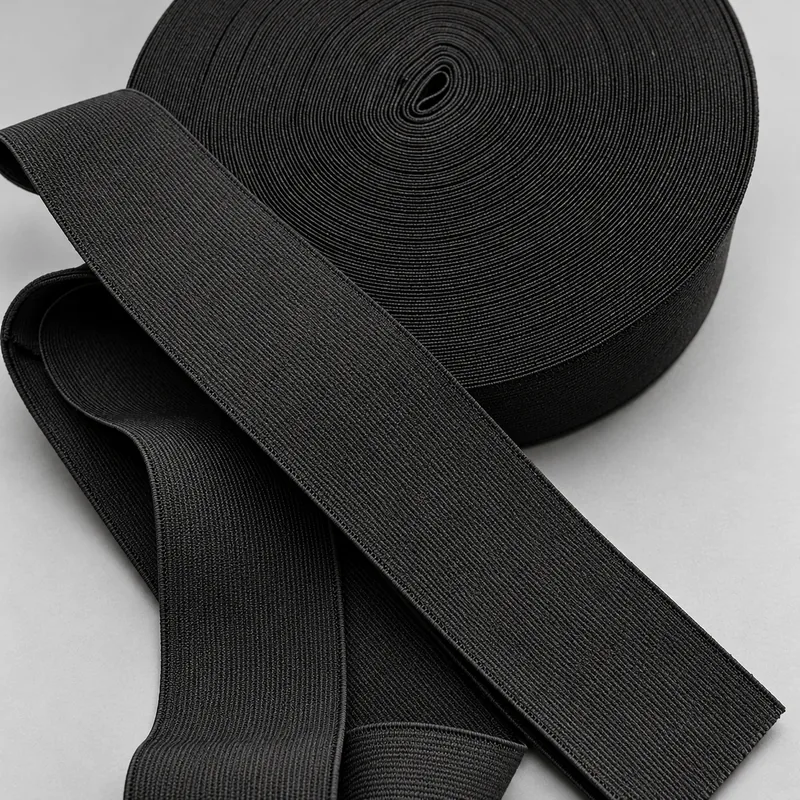
A sturdy elastic produced by weaving that holds its shape. A reliable choice for waistbands, sportswear and underwear applications.
- Product groups
- Elastic Bands
- Type
- Woven
- Use
- Waistbands, sportswear and underwear
- Production
- Istanbul · Custom colors and sizes for your brand
Woven elastic is a sturdy tape formed by interlocking warp and weft yarns on a weaving loom; it does not lose its width when stretched and returns reliably to its original length when released. It offers a dependable solution to problems such as rolling in waistbands, sagging in sportswear and loosening over time in underwear. At Elif Tekstil Aksesuarları, we produce woven elastic at our facility in Istanbul with the color, width and stretch balance tailored to your brand.
Request a quoteHolds Its Width When Stretched
In the woven structure, the weft yarns lock the width of the tape in place. When the elastic is stretched lengthwise, it does not narrow; it stays the same width from end to end in the waistband and keeps working without distorting the garment’s silhouette.
Resists Rolling
Thanks to its firm, balanced body, woven elastic shows no tendency to fold, twist or roll inside the casing. The waist area keeps a neat, taut and well-finished look all day long.
High Recovery
Returning reliably to its original length after being stretched and released, the structure delays loosening of the garment over long-term use. Recovery behavior is tested at the sampling stage and adjusted to the conditions your product will be used in.
Suitable for Direct Sewing
When sewn directly onto fabric, woven elastic retains most of its stretch. This makes it practical and reliable on the production line for both exposed waistbands and sewn-in waistband applications.
A good elastic is measured not by how far it stretches, but by how completely it returns to its original length when released.
The Woven Secret of an Elastic That Keeps Its Shape
Woven elastic is a type of tape produced on narrow fabric looms. The rubber or elastane yarns that provide the stretch run lengthwise, in the warp, while non-stretch weft yarns such as polyester or polyamide bind these elastic warps again with every pick. This cross-interlocking creates a uniform structure across the thickness and width of the tape. Whereas knitted elastic stretches through loops passing through one another, in weaving the yarns lock into each other. The result is an elastic with a fuller hand, a more defined body and better shape retention under load. That is why woven elastic is the first choice for applications with high tension.
Shape retention is the most critical property in determining how an elastic behaves inside a garment. If an elastic placed in a waistband narrows when stretched, it folds inside the casing, pulls on the seam line and creates irregular wrinkles around the waist. With woven elastic, the weft yarns keep the width fixed, so the tape stays the same width even under tension. The edges stay straight, the surface does not twist, and the line designed into the garment’s pattern is preserved. This stability makes a real difference in heavy-fabric sweatpants, work trousers and sportswear that requires active movement; the wearer feels only the comfort, not the elastic.
Recovery, meaning the extent to which an elastic returns to its original length after stretching, determines how long a product will keep its day-one appearance. A densely woven body and correctly chosen elastic yarn delay loosening of the waistband through repeated cycles of wearing and washing. At Elif Tekstil Aksesuarları, the elastic yarn type, warp density and tension setting on woven elastic projects are determined according to how your product will be used. Our sample department evaluates the sample tape for elongation and recovery, and you make your decision by trying it on your own pattern. Our more than ten years of experience is your strongest assurance in striking this balance.
Woven Elastic technical details
Values indicate typical production ranges; final size, color and material are confirmed upon sample approval.
- Product
- Woven Elastic
- Type
- Woven
- Production technique
- Narrow fabric loom
- Elastic yarn direction
- Warp (lengthwise)
- Weft yarn
- Polyester or polyamide
- Elastic component
- Rubber or elastane (on request)
- Width under tension
- Maintained, does not narrow
- Hand feel
- Firm, full body
- Width
- Typically 1–6 cm; on request
- Stretch
- Determined by sample testing
- Color
- White, black, custom-dyed for your brand
- Use
- Waistbands, sportswear and underwear
Where is it used?
Key applications for Woven Elastic.
Sweatpant and Trouser Waistbands
Placed in the waist casing of heavy knit and woven fabrics, woven elastic does not fold even when carrying heavy fabric, and keeps the waistline neat all day long.
Sports and Training Wear
It is the choice for waistbands that stay in place despite constant movement on running, fitness and team sports shorts, and it quickly returns to its original shape after sudden stretching.
Underwear Waistbands
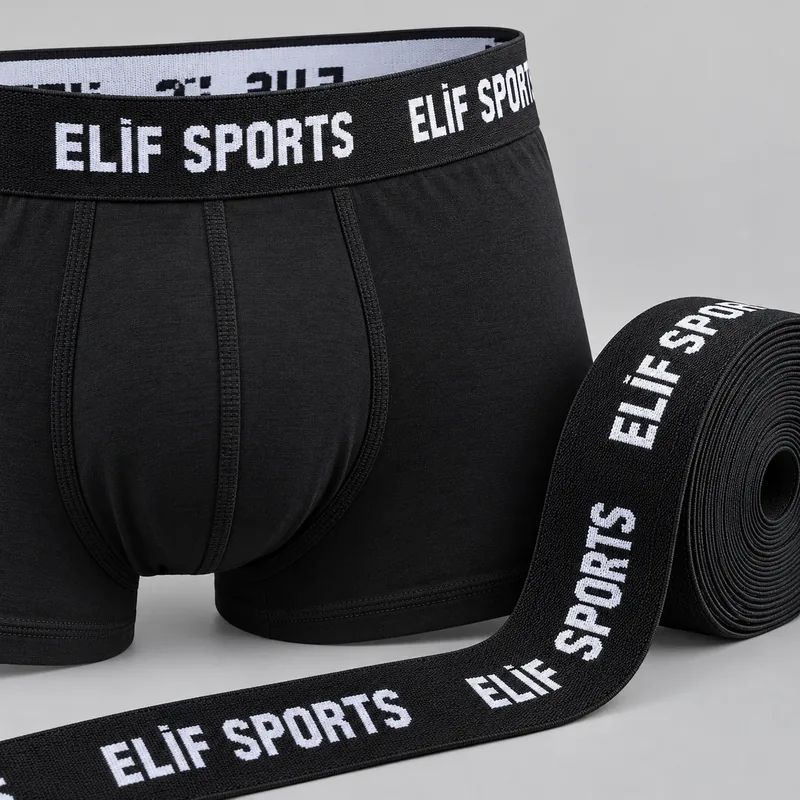
On products such as boxers, briefs and tank tops, it gives the waist area of underwear a secure fit and helps prevent the waistband from loosening prematurely through repeated washing.
Workwear and School Uniforms
On half-elastic work trousers, school tracksuits and uniforms, it offers a waistband solution that withstands heavy use and keeps its shape for a long time.
Support and Protective Bands
In wraparound products such as back support belts, knee supports and wrist supports, the firm body of woven elastic creates a balanced sense of compression that wraps the body in a controlled way.
Footwear and Bag Details
In the side gussets of elastic-sided boots, tongue keepers on shoes and inner compartments of bags, it provides a flexible connection point that does not loosen despite being opened and closed many times.
Features You Can Choose for Woven Elastic
The performance of woven elastic inside a garment is shaped by a few key decisions. You can finalize each option step by step with our team, from width to elastic yarn type, according to your product’s fabric, pattern, target audience and intensity of use.
About custom manufacturing- 01
Width
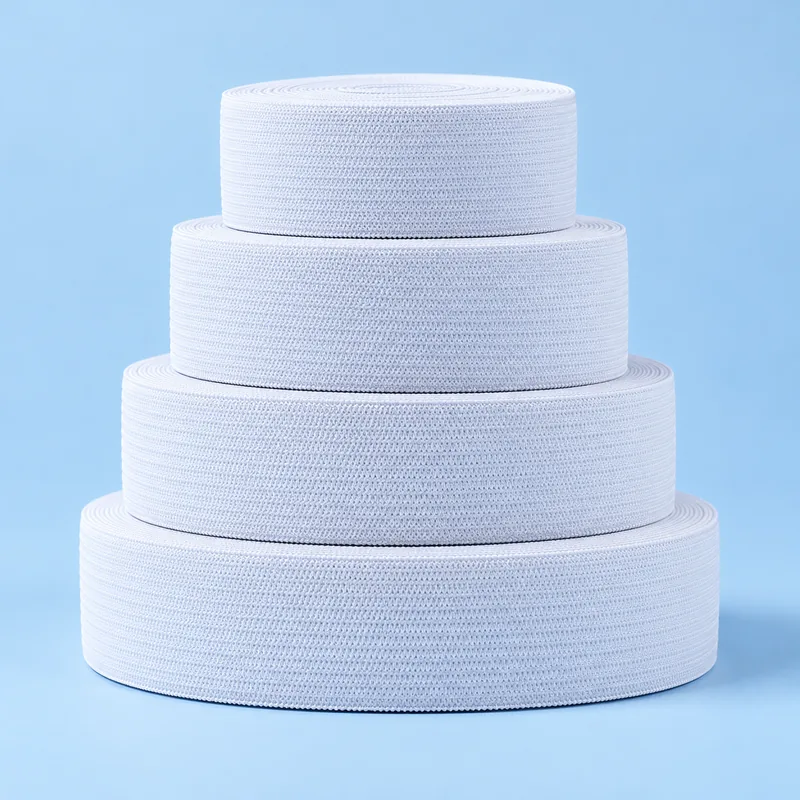
Narrow tapes are preferred for lightweight products and underwear details, and wide tapes for sweatpant and sportswear waistbands. The width is determined by fabric weight and the desired hold.
- 02
Degree of stretch
You may want a firmer, more supportive feel or a softer, more relaxed one. The right tension level for your product is achieved by adjusting the elastic yarn ratio and weave density.
- 03
Color and dyeing
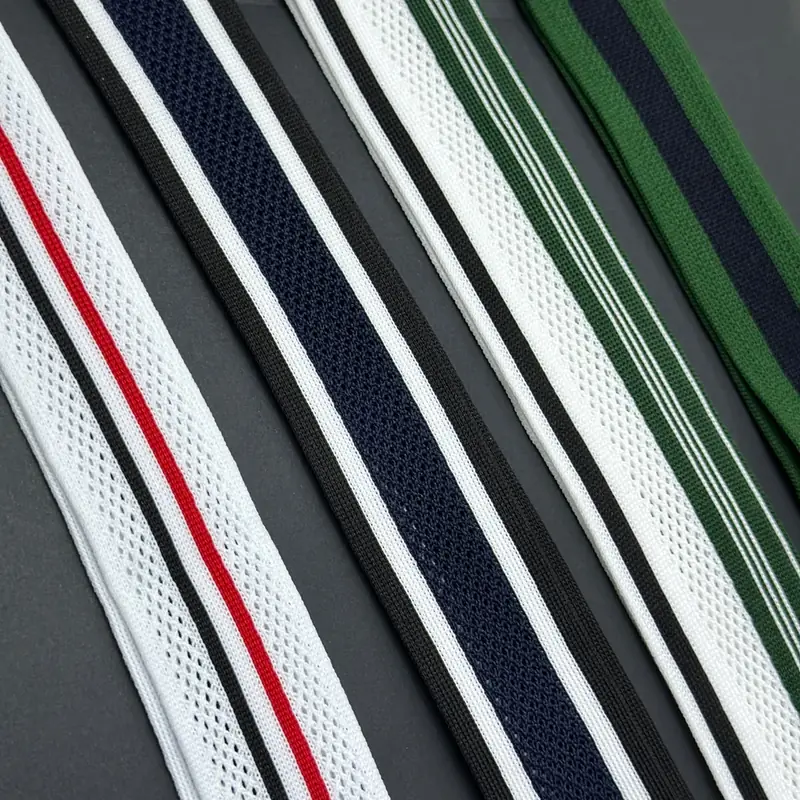
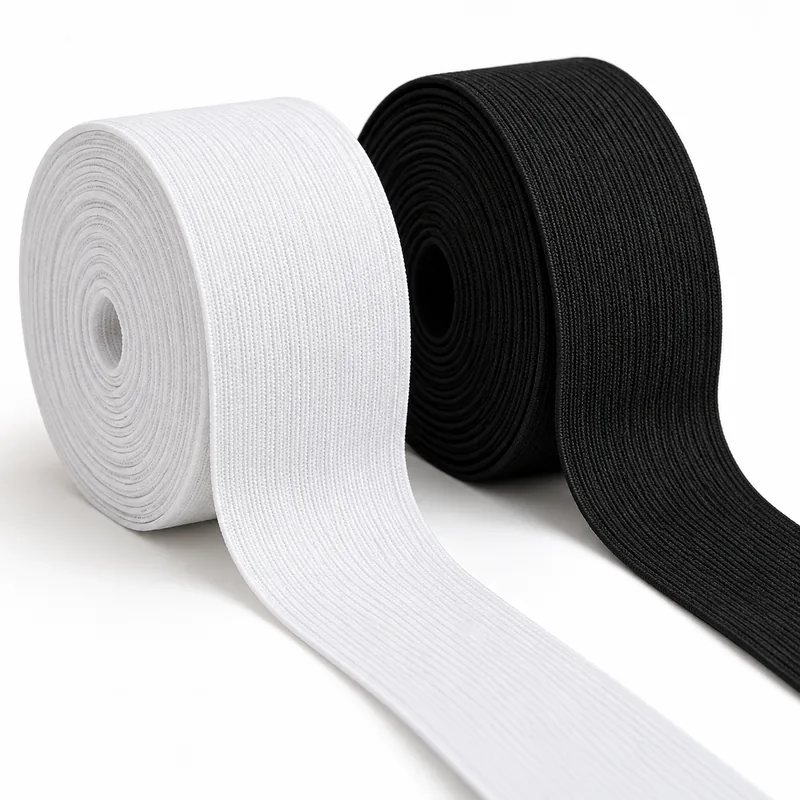
In addition to the basic colors white and black, custom colors can be developed to suit your fabric or brand palette. Color approval is given on a sample, checked in daylight and side by side with the fabric.
- 04
Surface texture
Alongside classic plain-surface weaving, ribbed or lightly patterned surface options can be offered. When the elastic is exposed, these options give the garment a subtle yet noticeable richness of texture.
- 05
Elastic yarn type
Rubber yarn provides strong recovery power, while elastane gives a finer, lighter structure. The choice is made together with you according to the product’s conditions of use and the intended hand feel.
Differences Between Woven, Knitted and Single Elastic
Although the three common elastic constructions may look similar, they behave very differently inside a garment. The table summarizes the strengths of woven elastic compared with knitted and single elastic, along with their suitable applications.
| Criterion | Woven Elastic | Knitted Elastic | Single (Braided) Elastic |
|---|---|---|---|
| Width under tension | Stays fixed | May narrow slightly | Narrows noticeably |
| Body and hand feel | Firm, full | Soft, light | Thin, slippery |
| Tendency to roll | Very low | Low to medium | May twist inside the casing |
| Direct sewing | Retains most of its stretch | Suitable | Use inside a casing recommended |
| Recovery stability | High | Good | Medium |
| Typical use | Waistbands, sportswear, heavy fabrics | Underwear, babywear, light fabrics | Leg openings, cuffs, casing waistbands |
From request to delivery, step by step
We stay in touch with you at every stage and never move on to the next step without your approval.
- 1
Application Analysis
We discuss which garment, which fabric and which area the elastic will be applied to. Fabric weight, exposed or casing application and the expected tension are the first data points for determining the right construction.
- 2
Width and Stretch Decision
Based on the information gathered, we recommend a tape width, elastic yarn type and weave density. The goal is to achieve a balanced level of stretch that feels both comfortable and supportive in your product.
- 3
Color Matching
If the elastic will be exposed, dye development is carried out according to the fabric or brand color; if it will stay inside a casing, basic colors are considered. The color decision is finalized on the sample and recorded.
- 4
Sample and Stretch Test
The sample tape is woven and checked for elongation and recovery. You also run a trial by sewing the elastic onto your own pattern; if needed, fine adjustments are made to the tension or width.
- 5
Production, Winding and Delivery
Mass production begins with the approved values, and batches are checked for width, color and stretch before being wound onto rolls. The labeled rolls are delivered according to the shipping plan created together for your project.
Tips That Extend the Shape Retention of Woven Elastic
- For sewing, use a ballpoint needle and a stretchable zigzag or coverstitch.
- Do not overstretch the elastic as it feeds into the machine; set the tension ratio in advance according to the pattern measurement.
- Choosing wider woven elastic for heavy fabrics and narrower elastic for light fabrics maintains the balance.
- High-heat drying weakens the recovery of elastic fibers; recommend low heat on the care label.
- Chlorine bleach and heavy use of fabric softener can reduce stretch; include this in the care instructions.
- Stretch and release a few meters from each incoming batch to check width and recovery values.
Woven Elastic: your questions answered
Can’t find the answer you’re looking for? Our team is happy to help.
What is woven elastic and how is it made?
Woven elastic is a stretchable tape produced on narrow fabric looms by binding elastic warp yarns with non-stretch weft yarns. Because the yarns lock into each other, the structure is firm, full and stable. It keeps its width when stretched, does not roll and returns to its original length when released. With these properties, it is widely used in waistband and sportswear applications in particular.
What is the difference between woven elastic and knitted elastic?
In woven elastic, the yarns interlock, which provides a firmer body, a width that stays fixed and strong shape retention. In knitted elastic, the loops pass through one another, resulting in a softer, lighter and skin-friendly tape. Woven elastic is preferred for heavy fabrics and high tension, and knitted elastic for lightweight products and a soft hand feel.
Why is woven elastic preferred for waistbands?
The most common waistband problems are the elastic folding inside the casing, twisting and loosening over time. Because woven elastic does not narrow when stretched and keeps its shape thanks to its firm body, it largely prevents these problems. It delivers reliable results especially on products with a lot of movement and fabric weight, such as sweatpants, work trousers and sports shorts.
In what widths is woven elastic produced?
Woven elastic is typically used in widths between 1 and 6 cm. Narrower tapes are preferred for underwear details and wider tapes for sweatpant and sportswear waistbands. The exact size is determined by the weight of your fabric, the casing width in your pattern and the hold you want. If you need a non-standard size, we evaluate your request together at the sampling stage.
Can woven elastic be sewn directly onto fabric?
Yes. When sewn directly onto fabric, woven elastic retains most of its stretch, so it can easily be used in exposed waistband applications and sewn-in waistbands. For the best results, we recommend a ballpoint needle, a stretchable zigzag or coverstitch and a balanced feed tension. It also works perfectly well in casing applications.
Can woven elastic be produced in a custom brand color?
Yes. In addition to basic colors such as white and black, dye development matched to your fabric or corporate color can be carried out for products where the elastic will be visible. To match the color, simply send a fabric swatch or color code. Once the final shade is approved on a sample, it is used as the reference in mass production, so shade consistency is maintained across different batches.
How does a wholesale woven elastic order work?
The process begins with defining your product and fabric, after which width, stretch and color recommendations are prepared. The sample tape is submitted for your approval; after approval, mass production and quality control are carried out, and the rolls are wound and shipped. The delivery plan and pricing are determined specifically for each project based on yardage and technical details. To get a quote, simply share the product type, width and color information.